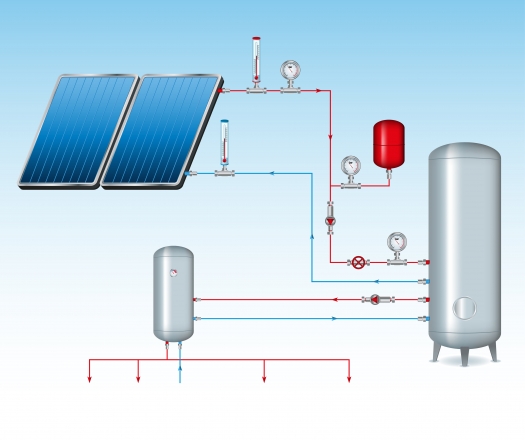
The other factor specific to solar glycol is is ability to completely vaporize or steam when stagnation temperatures are present.
Glycol replacement in solar panels.
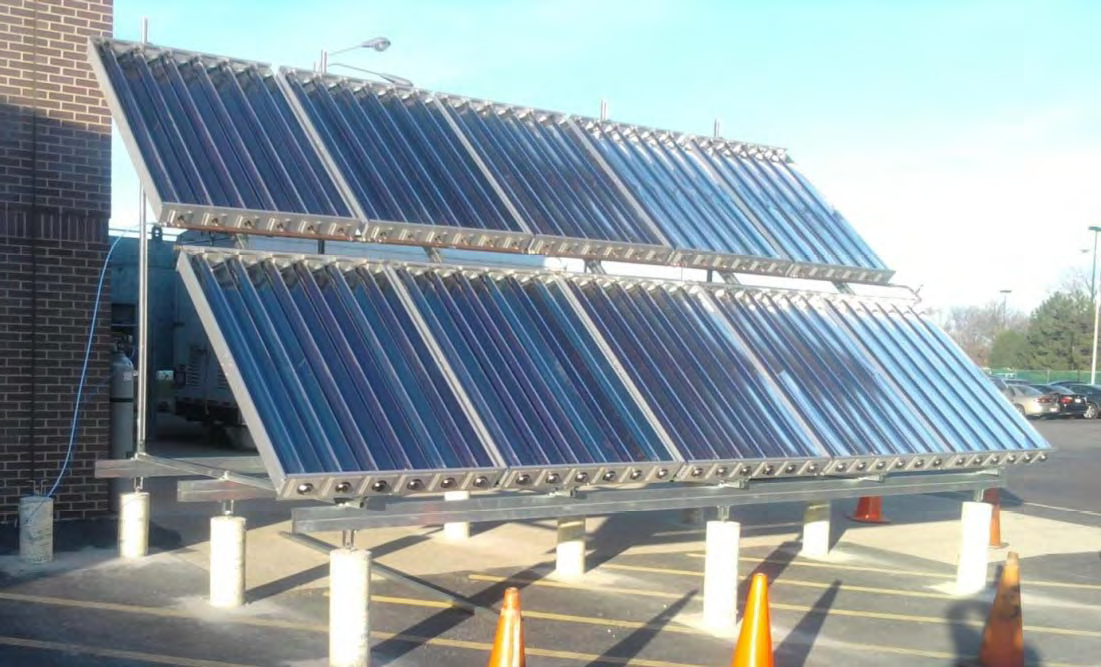
The renewable green alternative to ethylene or propylene glycol has a slower thermal degradation rate than both ethylene glycol and propylene glycol and outperforms propylene glycol s viscosity at lower temperatures.
A conventional immmersion heater or gas boiler can be used to top up the temperature of the water particularly in winter or to provide extra hot water when required.
Solar glycol such as prosoltm l ht is rated to 425 f with short periods of up to 475f.
Air in the loop can cause pump.
This is not always the case we will test the condition of your system before we do.
Most glycol will break down and become acid needing immediate replacement if those temperatures are reached.
When commissioning a pressurized glycol solar hot water system it is essential that all the air in the solar loop is removed.
All glycol products used in solar fluid mixes come with a dilution chart an example of which is shown below.
Most solar thermal systems use antifreeze as the liquid to transport heat from the solar panel to the cylinder.
For solar thermal applications mixtures based on propylene glycol or the green glycol are recommended.
During static conditions the solar collectors should be completely empty so that the thermal fluid is not exposed to extreme temperatures.
However you should always mix as much water as possible with your choice of glycol product as simple water is the ideal solar fluid.
Sentinel r100 solar thermal fluid is glycol based and designed for use in solar heating equipment operating up to 200 c.
It s non toxic biodegradable and relatively stable.
The antifreeze is normally non toxic propylene glycol as opposed to toxic ethylene glycol.
An antifreeze change may be required for your solar system.
Antifreeze fluids degrade over time and normally should be changed every 3 5 years.
It is vital that you consult the chart to avoid mixing too little or too much glycol into your system too little will risk consequences in cold weather too much will reduce the mix s efficiency.
Solar water heating systems that use an antifreeze solution propylene glycol or ethylene glycol as a heat transfer fluid have effective freeze protection as long as the proper antifreeze concentration is maintained.